



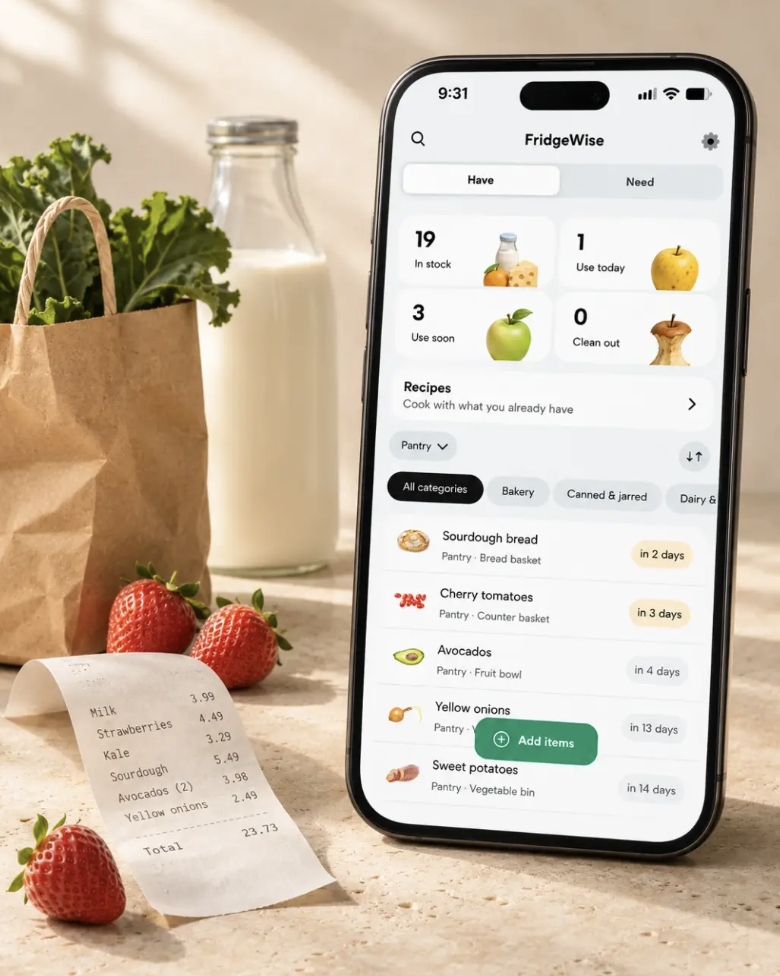
A digital kitchen inventory is a list of the food already in the house, kept on a phone and updated as items come and go. Setting one up takes an afternoon, and keeping it current takes seconds at a time once the habit attaches to cooking and shopping. The payoff is fewer forgotten ingredients and grocery trips that start from facts instead of guesses.
Why track the food already in the house
Most kitchens lose food quietly, a few items at a time. A yogurt slides to the back of the fridge, a bag of spinach gets buried under newer groceries, and a can of tomatoes disappears behind others just like it. None of this feels like waste at the time, but it adds up to money thrown out with the trash every week.
Perishable goods cause most of the damage, because dairy, meat, and fresh produce have a short window before they spoil. Dry goods last longer, so they get rebought instead of eaten, which is how pantries fill with duplicates. With a current list, meals get planned around food that needs using, and nobody buys a fifth jar of paprika by accident.
Where paper lists and spreadsheets fall short
The failure point of a paper list or a dry-erase board is the update step. The system only works if every person in the household crosses items off the moment they get used, and that step gets skipped on busy evenings. Within a week or two, the list no longer matches the shelves, and once trust in it goes, nobody consults it.
A shared spreadsheet fixes access, since everyone can open it on a phone, but every entry is still typed in by hand. Logging a full grocery run that way takes long enough that people put it off, and a list that lags behind reality is nearly as useless as no list at all. Dedicated inventory apps close this gap with barcode scanning, receipt import, and syncing between household members, and FridgeWise is one option in that category.
The first audit, one zone at a time
The initial audit is the only time-consuming part. Start with the fridge, because perishables turn over fastest and their dates go stale soonest. Move to the freezer next, then finish with the pantry, where nothing is urgent, and the count can pause if energy runs out.
For each item, record only what will be used later: the name, the quantity, and a date. The date can be the purchase day or the date printed on the package, provided the choice stays consistent across the whole inventory. A location note helps in a large kitchen, though in most homes the zone is enough detail.
Resist logging every spice jar on day one.
Eighty items that don’t get updated are worse than thirty that stay current. Begin with the food the household eats every week and add the rest once the habit holds.
Making FIFO work with dates and alerts
First in, first out is the rule that older items get used before newer ones, and professional kitchens have run on it for decades. At home the principle is the same, but nobody rotates stock out of habit. When every item carries a date, the inventory can flag what needs eating soon, and those flags become the starting point for the week’s meal plan.
Meal planning then works backward from whatever the alerts surface. If chicken and half a bag of spinach are flagged for this week, Tuesday’s dinner is mostly decided, and the nightly decision about what to cook narrows to a short list. Anything that cannot be used in time can often be frozen and kept on the list under a new date.
Building updates into cooking and shopping
A digital inventory survives on small updates, and each one has a natural trigger. New groceries get scanned or entered while they are unpacked, before they disappear into the shelves. Ingredients get marked as used during cooking, or right after, when the pan is still on the stove. Both steps are quick, but both have to happen when the food moves, because a backlog never gets cleared.
Once everyone shares the same list, the person who stops at the store on the way home knows what is actually needed, and two people no longer buy the same ingredient on the same day. Foods that have been used up can be added to the shared grocery list when they need buying again.
A short weekly review keeps the list honest. Before the meal plan gets written, scan the alerts, check the freezer for anything buried, and confirm the grocery list matches what the week actually needs. Five minutes here prevents the slow drift that killed the paper version.
After a few weeks of this, the list stops feeling like a project and becomes the default starting point for dinner. The audit takes an afternoon. After that, updates take seconds.